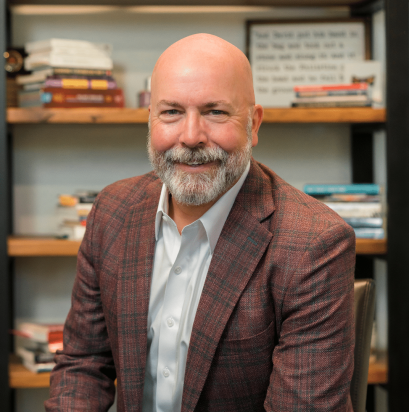
About the Guest
Emmy award-winning photojournalist turned trial lawyer. J.D. from the University of Denver Sturm College of Law (top 1%). Adjunct professor of trial advocacy for over a decade. Super Lawyer every year since 2012. Author of Results Matter. Serving clients in Colorado, New Mexico, and Wyoming.
From Photojournalist to Trial Lawyer: The CEO’s Dilemma
Every law firm founder eventually faces a difficult choice: remain a practitioner or become a CEO. For Sean Olson, this was not just a business problem — it was a personal journey that began with an Emmy-winning career in photojournalism. In this episode, Sean shares his evolution from telling stories with a camera to telling them in a courtroom, and how he navigates the constant tension between being a trial lawyer and running a growing multi-state firm.
A Career-Defining Case
For ten years, Sean built a successful practice representing law enforcement and firefighters. But one case changed everything. He was asked to serve as trial counsel for a 22-year-old woman who suffered a lifelong brain injury in a drunk driving crash. The verdict would determine if she could receive care at home or would spend the rest of her life in a state institution. The stakes, and the humanity of the clients, were a revelation. “It just changed me,” Sean recalls. It was then he decided to pivot entirely into personal injury litigation.
Building a Firm by the Book
Launching a new practice was a formidable challenge. “I recognized early on that there was a lot I didn’t know,” Sean admits. He dove into learning, joining mastermind groups and reading every book he could find on the business of law. This led to an obsession with process. He realized that to deliver a consistently high-quality client experience, he needed to systematize everything — from the initial client call to the complex deadlines involved with responding to discovery. This focus on process ensures that no client’s case ever falls through the cracks, a common fear for many rapidly growing firms.
Marketing with a Narrative
Competing against “billboard firms” with massive budgets, Sean knew he could not win by outspending them. Instead, he leaned on his storytelling roots. His most effective marketing is not about promising a quick payout; it is about telling his firm’s story and showing clients who they are. This approach attracts clients who are looking for a genuine advocate, especially in the competitive world of personal injury. It is a strategy built on trust, not transactions, and one that helps weed out the clients who are just looking for a payday after a minor fender-bender.
The Final Verdict
Today, Sean spends nearly 80% of his time on CEO duties and only 20% practicing law. He has learned that the old advice might be true: you have to choose between being a trial lawyer and being a CEO. His story is a powerful reminder that scaling a law firm is a constant process of letting go, delegating, and trusting the team and systems you have built to carry the mission forward.
Full Episode Transcript
Click any timestamp to jump to that moment in the audio player above.
Introduction
Sean Olson: As I go through some of these tomes that doctors learn from and, you know, I learn about the signs and symptoms of a disease or what needs to be done to remove a gallbladder, you know, I think, yeah, I probably know enough at this point in time. My problem is, is the blood still makes me queasy. So there’s not a chance in hell that I’d be able to get through medical school, not in one piece.
Arthur Rothrock: Today, we’re talking to Sean Olson, founding attorney of Olson Personal Injury Lawyers, a firm survey clients across Colorado, New Mexico, and Wyoming. Sean grew up in a small farming town in Wisconsin before earning his journalism degree from Drake University. He then built an Emmy award winning career as a photojournalist traveling the world and even working with Animal Planet before deciding he wanted to do more than just observe. He wanted to help. That calling led him to the University of Denver’s term college of law, where he graduated in the top 1% of his class and used to serve as an adjunct professor teaching trial advocacy for over a decade. Since founding his firm in 2012, Sean and his team have secured millions of dollars for clients in personal injury, medical malpractice and nursing home abuse cases. He’s been recognized as a super lawyer every year since 2012 and authored Results Matter, a practical guide for those navigating personal injury lawsuits. His journey from storytelling with a camera to advocating in the courtroom has shaped his approach. He sees every case as a story that deserves to be told. Sean, thank you very much for being a guest today. Hey, thanks for having me Arthur. It’s an honor. No problem. Can you tell us a little bit more about your practice, what you’re doing, what your typical clients look like? Yeah, so we are a personal injury practice that practices really across the Mountain West, primarily Wyoming, Colorado and New Mexico.
Sean Olson: We do a variety of personal injury sorts of claims. We do everything from medical malpractice to car accidents to nursing home cases as you mentioned. And then a lot you know all the outliers as well. Different things that come up just general negligence cases, misuse of firearms, mishandling of drugs. There’s been all kinds of different things that we do and we do it across the mountain list. Thanks. Can you give me a little bit about how big your firm is to put that in context? Yeah so we are five lawyers big at this point in time. Lawyers licensed in multiple states and I think we’ve got a staff of
Sean Olson: 12 or 13 at this point in time and we’re constantly adding to that number as we see holes in the things that we do and keep filling those holes with more staff. Was the multi state approach something intentional or something that just sort of happened naturally by virtue of yourself and It’s probably a little bit of both. Know, it was something that was intentional. I’ve always practiced in Wyoming since I got my law license. And when I started doing personal injury work I looked there you know and saw that there really was a dearth of you know folks who are doing that kind of work and doing it well and so when I started practicing personal injury work in Colorado it was just a natural choice to, you know, to move there as well and, you know, plant a flag. And then most recently, we’ve moved down into New Mexico where we opened an office in Albuquerque,
Sean Olson: You know for the primarily the same reason you know they’ve got a lawyer population down there that’s shrinking and quite frankly you know we thought the people in New Mexico would be served by good attorneys as well. Oh great. I think that’s there’s certainly a lot of areas that are pretty underserved that could use a lot more help than they’re actually getting. I think that’s true. Yeah, absolutely. And you know and part of the problem is you know you’ve got these big firms no matter what state you’re in these giant firms that just act like sponges with their you know billboards and TV advertisements and things like that just soak up a lot of the clientele out there that doesn’t know any better and so I you know I think smaller firms like ours you know who have focus on trial practice and
From Law Enforcement to Personal Injury
Sean Olson: practicing good law really serve a niche we serve a need that’s out there. That’s great. Did you always do personal injury? I didn’t. I spent about a decade after I graduated from law school representing law enforcement, firefighters and EMTs. And so I worked primarily through their unions and things like that, doing just about everything that they needed, Whether that was employment work, criminal work, civil defense work, we just had sort of that as our base of clientele.
Sean Olson: Do you have that sort of background already? How did you get into working with them in the first place? I didn’t. It was a total accident really. I had befriended a judge during my, I think it was my second year of law school. She was teaching trial, the second trial advocacy class. And so I got to know her and befriended her and she was sort of a mentor of mine for quite a while. And one day I was out in the hall with her and a former she had done that kind of work before. And I was in the hall talking to her one day and one of her former partners happened to walk up and say to her, Hey, we’re looking for a law clerk for the summer. Do you know of anybody? And she immediately looked at me and said, hey, what about this guy? And so I started just as a total fluke. I’ve just started working as a law clerk for those guys and, just really enjoyed the work. I enjoyed the clients and ended up being what I did for the next ten years. So when was the point where you sort of decided that you wanted to do something different and get into personal injury?
Sean Olson: So that point came back in 2016 is when it started. I had been invited by another lawyer to serve as trial counsel in a personal injury case. And it was a case that that lawyer had been working on for almost a decade at that point in time. It had been up to the Court of Appeals a couple of times and then up to the Colorado Supreme Court before the Supreme Court finally said it’s time for a trial in this case. His daughter was a former student of mine from the University of Denver and she suggested to him, hey why don’t we bring Sean in to help out? And so I did. I agreed to help out and it was it was a case of a with a 22 year old girl who was horribly injured in a drunk driving crash. She was irreparably harmed, lifelong brain injury and the outcome of that case was going to dictate whether she spent the rest of her life in a state run institution or if she was going be able to stay at home and receive care from her parents you know and medical professionals that could come to her home.
The Case That Changed Everything
Sean Olson: So you know the stakes were extraordinarily high, the clients were fantastic people and it just changed me. Changed the way I looked at the law, changed the way I looked at my career and it was after that case that I decided you know I’m I gotta make this shift, you know I’m gonna do something different And so it took a few years to kind of transition out of doing the kind of work I was doing and move into personal injury work. And so now I think since 2000, was it ’18 or ’19 when we finally made the full transition, now we’re just exclusively personal injury lawyers here. It’s great. It sounds like, you know, you had a, that experience really changed your outlook on things. And I mean, I feel like it’s one of those cases where you feel really good about advocating for your client at that point. It’s like, there’s, there’s no if, ands or buts about who you’re representing and what you’re trying to accomplish for them versus sometimes with corporate clients, for others, it gets a little murky and you’re like, I don’t really know if I’m on the right side here, but I’m just gonna do it anyway because that’s what I have to do. It seems like it’s a lot more clear cut in personal injury. I think oftentimes it is. Mean you know there’s there are some cases where you get in and you know eventually you realize hey I might be barking up the wrong tree with this one But I think, you know, for the majority of the cases that we take on, we’re pretty selective about what we take on and what we don’t. You know, I think 99.9%
Client Selection and Red Flags
Sean Olson: of the time we’re on the side of the right and, you know, I can say that with confidence. Is there, any sort of red flags that you look out for whenever you have a client come in or a potential client come in the door? You know, I think the things that we look out for are people who are exaggerating, you know, exaggerating injuries, you know. Anytime you start hearing things that sound too good to possibly be true you know those are red flags for us you know. That means okay we got to do a little bit more investigating on this case before we agree to take it on. You know get to know the clients get to know the medicine behind what’s going on with them or really figure out you know what was the mechanism of their injury to begin with. So those are those are red flags I look out for most often is the exaggeration.
Sean Olson: I think the more I know the more I question my judgment you know in terms of those things at least at the beginning of a case and that’s a problem you know because a lot of people call up and then during that first conversation you know they want you know what hey what’s my case worth? And you know and I think a lot of that comes from again the billboards and the TV advertisements you know or you know that’s a tagline for a lot of lawyers you know give us a call we’ll tell you what your case is worth and no lawyer could do that you know not an initial phone call you know it takes months to develop a case put it all together you know figure out what the injuries are figure out what the liability looks like focus group the things, see what people think about it. So it’s a hard thing to do and you know it’s part science, part art form, part guessing and
Arthur Rothrock: I like to think that I’m going to get better at it and be able to do it off the cuff but I certainly haven’t gotten there yet. It’s true that the folks that know the least tend to be the loudest and the folks that know the most tend to be the quietest. Because they have a pretty big awareness in terms of how little that they actually know, I think that can make things a little bit more difficult, especially if you’re a professional and you do know a lot. It’s hard to be like, well, I can’t, it depends. You don’t want to pound the table on something and then, you know, have to not There’s be wrong and be nothing more embarrassing than that. Especially
Sean Olson: if you’re in court. Here’s the judge telling you. Those are the darkest of moments. Is there like a trial period then that you sort of go through with these potential clients before you actually sign them to, I mean, what’s the point where you sort of get a sense of like what their case is worth or do you just care more about, are they telling me the truth and does there seem to be something here? And so I’m gonna, I’ll sign them and then see where it goes. I mean, we tend to do that more often than not. You know if we meet with a client and the story they’re telling is compelling and we like the clients, we think they’re going to be a good fit. Oftentimes we’ll sign it up, you know and get them under our umbrella and then figure out down the road, you know, whether it’s something we can proceed with or not. We find that particularly in medical malpractice cases because those are so complex. We can hear a story and you can be outraged about it and think, oh my gosh, how could this ever happen, You know, a civilized society.
Sean Olson: You know, and then three months down the road we’re able to talk to some doctors about it, show them the records, and they’re like, yeah, this kind of thing happens from time to time. And it’s not because someone wasn’t being careful or someone was negligent or whatever the case may be, it’s just a known risk of the procedure. So we’ve run into that a fair amount you know and just have one of those calls today where we had to tell somebody that what we thought was true when we first spoke to them turned out to not be entirely accurate and we had to let them go and those are tough conversations to have. I don’t like having them but at the same time I think people are often grateful to simply have some answers eventually
Arthur Rothrock: Cause oftentimes they don’t get them from their own doctors. Yeah, the last thing you want to do is drag up them into litigation that can go on for years and be really trying mentally and physically to only end up not getting a good result at the end. That’s not something that anyone wants to really go through I think. Absolutely, right. And so it’s best to let those folks know early on what it’s going to look like rather than, like you said, dragging them through two years of litigation to find that point. Yeah. You feel like, you should be an honorary doctor at this point?
Sean Olson: I did like a year and a half of workers’ comp defense and after reading so many medical records and all these expert reports, was like, man, feel like I could probably diagnose someone right now with something. Sometimes I think that ends up being the case, as I go through some of these tomes that doctors learn from and I learn about the signs and symptoms of a disease or what needs to be done to remove a gallbladder,
Sean Olson: I think, yeah, I probably know enough at this point in time. My problem is the blood, but still makes me queasy. So there’s not a chance in hell that I’d be able to get through medical school, not in one piece. But pictures of blood are okay? I feel like that would be hard to The pictures are usually okay. It’s the actual blood itself that I’m not very good with. My next question was going be how the hell do you prosecute a case when you’re like, I don’t really want to look at any pictures that have blood. As long as it’s two dimensional.
Sean Olson: You weren’t always, I mean, started off on your own or did you start with a couple people to begin with? What was the sort of early days of your practice? So the early days of the personal injury practice were just me. At that point in time I was on my own. I was in, you know, like I said, another firm where we did police work and that kind of thing and I had some partners doing that. We all went our different ways back in 2013 or late twenty twelve, early twenty thirteen. And then once I, yeah, once I started the personal injury part of things, I was already on my own. It wasn’t a matter of, you know, trying to find other partners or anything else. I just knew what I wanted to do and I did it. Was there like a point where you felt like you knew you could do it on your own and that was like when you would go jump or was it just sort of circumstances resulted where you ended up popping up? Circumstances, yeah, circumstances has kind of resulted like that. I think back in those days, know, when I first started doing this, you know, seventeen-eighteen,
Sean Olson: I probably would have been happy to have a partner, you know, someone in the boat with me, you know, who was up at 03:00 in the morning worrying about how all this was going to work, you know, instead of being alone. But now you know I think I’m at just a different point in my career where it doesn’t matter so much to me, know, I’ve got a good team around me, I’ve got a lot of good lawyers around me and you know and everything’s everything works now you know without me thinking about it and dwelling on it.
Arthur Rothrock: Makes sense. When did you start adding on new folks or when did you decide that you needed to hire more people?
Sean Olson: Well that’s a good question. It was probably you know
Sean Olson: probably after one of those 03:00 in the morning nights that I you know realized that I just couldn’t get this done on my own and you know I recognized early on that there was a lot I didn’t know. I didn’t know how to run a business, I didn’t know a great deal about practicing personal injury law and so I did everything I could to learn as much as I could. Know I joined organizations around the country, I joined mastermind groups, I read every book that’s been published about the both the business and the practice of personal injury law and that’s really you know what eventually got me to hiring my first employee you know and then my second employee you know because that stuff’s scary you know taking on the responsibility of a of another person you know and having that under your belt in addition to all the other stuff you got to worry about but 100% of the time that I finally make that decision to hire somebody I’m happy that I did it. I think there’s when you start a family and it’s pretty stressful and then starting a business, same sort of stress where you have folks that are depending on you to bring in work and to keep that work coming and get their bills paid can be pretty stressful. It can be, yeah. And then eventually you realize it’s all gonna work out just fine anyway, but that takes time. It does. What was
Marketing Without a Big Budget
Arthur Rothrock: you know, what was sort of the hardest thing to learn about, you know, become a personal injury attorney, at least as far as, you know, marketing and building your business. You mentioned that there’s, you know, a lot of these big firms, they have billboards, they have ads, and you know, some of the folks that we’ve had on this podcast, you know, their budgets for marketing are pretty sizable. I mean, they’re, they’ll spend tens of thousands of dollars a month, you know, on Facebook ads or on TV ads or all that sort of stuff. And so it seems like, unless you have like a big nest egg to begin with from maybe you had that to run with it or you know, what was sort of the process there in terms of getting your marketing when you spun up?
Sean Olson: Yeah, you know, and back then I didn’t have a nest egg of any kind really. You know, I had a couple of clients that I could rely on for a monthly income but in terms of you know having you know that year of income set aside that I could live off of and that kind of thing I just didn’t have any of that. And so we just started small.
Sean Olson: You know I tried I had to figure out and I think the most important thing I learned along that line was you know figure out who I am you know what do I want to bring to this marketplace that’s different from everybody else and then start small you know. Think we started out with probably I think it was social media advertising as well back then you know we had a tiny budget and it was that and a couple of directories that really got us you know put us on the map, you know, and creating a website, you know, probably for a couple thousand bucks.
Sean Olson: That, you know, we started with that and then eventually just kept growing, you know, figuring out what works, invest more in that and then find the next thing that’s going to work and start investing in that. A lot of trial and error, a lot of wasted money, yeah, a lot of getting taken advantage of by you know some of the folks that are in this business, you know who are there to take advantage of lawyers. What’s the you know what are your red flags for you know marketing vendors and sales folks that you know folks should look out for when they’re considering doing this marketing stuff and hiring someone for it? I think the biggest red flag is the person who calls you or writes to you, you know, sends you a message saying, I can get you 20 new car accident cases next month. You know all I need is $50,000 from me or whatever the case may be. You know it’s those guys who run the lead services that promise you the moon and deliver absolutely nothing. Those guys are red flags. Any of the leads I think are red flags. That’s pretty interesting to hear. I feel like it’s the first thing that folks might want to try because I don’t know how to do marketing.
Arthur Rothrock: I just give them money you know you spend money to make money so that I’ll get these leads but if it sounds too good to be true then it probably is. Right. But it’s you know it’s hard to know that because you know a lot of these guys pitch a good game
Sean Olson: you know and talk about all the successes that they’ve had or been you know unable to bring to other lawyers and it’s yet it’s tempting to just say okay I can just invest $10,000 and get five new cases that sounds like a good deal. Rarely is it you know. Good marketing, good branding, it takes time and, you know, so often we’re impatient with it and we just want to we want to get to the goods and I get that, you know, I’ve been there too, I’m still there. In reality, all that stuff takes time and it takes a continuous investment over a matter of years, know, to get yourself to a place where you’ve actually got that steady stream of business coming to you. How long before you know whether or not a certain marketing channel is gonna bear fruit or not before you decide to kill it? You know generally I if I make the commitment to doing something now I generally say I’m gonna give it three to four months to see what it looks like assuming it’s a sort of a direct marketing campaign of some variety where I expect to be able to track results. A lot of what we do now is just branding work, whether that’s social media branding or billboard branding, you know, or anything like that. And we don’t always necessarily anticipate a quick turnaround. In those cases we’ll say, okay, we’re going to commit to this for a year or maybe two years and see what it looks like at the end of that period of time, see if it’s worth us continuing to invest in that. So it really kind of depends on the channel and what we’re doing and what our goals are with that. Have you figured out what sort of budget you need for marketing or has that sort of been a moving target over the years? You know, think it’s probably a moving target in terms of you’re talking about like in terms of percentage of our gross and that kind of thing. Sure. You know, some folks will be like, I, you know, I have to do at least five to ten thousand and then for three to four months and then that’ll at least let me if I see some traction, then I know I’m onto something. But if you understand Oh, I see what you’re you never get enough, like, don’t get enough data from the amount of spend that you gotta take. Right. Yeah. Yeah. Yeah. I yeah. I think what what’s important to know is your numbers when you’re dealing with that kind of thing. You have to figure out what your average case value is to begin with, and then from there reverse engineer, you know, how much can I afford to buy one of those cases that is my average case value?
Sean Olson: And you know whether that’s you can afford $2,000 or $5,000 depending on the kind of case, you figure that out. And then when you’re experimenting with different marketing channels you figure out, okay with this marketing channel it costs me $7,000
Sean Olson: per case. I can’t afford that. That is not as efficient as as I can afford. Or on the other end of that spectrum, you might find, holy cow, you know, this thing’s great. It’s only costing me a thousand dollars a case. I can do this all day long. And then you invest more into that. So that’s how we kind of figure that out,
Sean Olson: but it’s a trial and error process for sure. Lots of mistakes get made. That’s how we learn. Trauma is a good teacher and mistakes, keep you up at night so you don’t make them again. In this profession that’s all it is, that’s why it’s the practice of law. I think that yeah, practice of law, practice of business for sure. Have you ever noticed any big differences in terms of what lands marketing wise between Colorado, New Mexico and Wyoming? I’d say that I’m wondering if there is any sort of state differences or if you’ve noticed your marketing tends to land the same way, whatever the state is. Yeah, I don’t know if it differs necessarily by market, by the states that we’re in. I but I have found, I think the marketing that works best for us is marketing that tells a story. It’s not just hey what’s your case worth or were you in an accident call us. It’s marketing that the marketing that works for us is the marketing that tells our story and that’s what I found works
Sean Olson: works the best because people people get then or have at least have a sense of who we are and they want to work with us so that when they call it’s not because they’re just calling some random number. They’re calling a number because they have some sense of who we are and who we work with and they want to be a part of that. And that’s the most effective marketing we do. I think that makes a lot of sense. I had a previous guest on here and he was at a large personal injury firm down in LA and elsewhere.
Sean Olson: And they talked about a lot about having very trauma informed messaging. Like they wanted to make sure that the folks that they were marketing at felt like they could trust them because you know, when these things happen, you feel very vulnerable and you need to, you want to find people that you can feel safe and comfortable with. And trying to convey that in your marketing and your messaging can be pretty difficult. And it goes against a lot of, you know, what we’re used to in terms of billboards and I’ll get you money now and stuff when people really just want someone that, you know, looks out for them. Is that sort of a similar approach that you guys are going for? What do mean by that? Yeah, I think you’re yeah, very similar. You know, it’s it’s a longer form of marketing, you know, marketing that can’t get done, you know, inside of twenty seconds or thirty seconds or whatever. But the same idea, right? I mean, you want, you want people to call you who want to call you, you know, and have a good reason for calling you. You know those are the good cases quite frankly. It’s not the oh you know I you know my neck is a little bit sore after I got tapped on in a parking lot you know as I was pulling out of a spot. Those aren’t the cases that, you know, we’re going to add value to or, you know, really help somebody out with. It’s the other kinds of case. Those folks who do feel vulnerable because they’re going through one of the worst experiences of their lifetimes, and they really just need an advocate. They need someone who can show them how is this going to work where how we’re going to get to the end of this and what’s that going to look like at the end of the day. And hopefully it’s those cases that we bring value to that it makes sense to hire us to represent them because they end up in a better position at the end of the day than they were before they called us. A little earlier you mentioned something that I sort of picked up on in terms of how the firm kind of runs itself at this point. I was wondering, you know, do you have some sort of system or processes set up? As you know, I mean, a lot of attorneys are not the best at returning calls or picking up the phone or having staff, but and that can really go hand in hand with making someone who’s vulnerable, trying to find someone that cares about them feel welcome. Do you have some sort of system in place? What’s your preferred sort of process for that? Yeah, we’ve got a ton of systems in place at this point in time. We have systems for just about everything that happens here and every day we’re like, oh, we need a new policy for that, we need to figure out a new procedure to do this, you know, and the goal there is to make sure that everybody who calls us gets the same level of experience as everybody else. I don’t want to say it’s not a McDonald’s sort of thing you know like maybe it is where everyone’s getting the same kind of burger no matter where you are where you’re calling from. We kind of want that that same experience for everybody. What we offer is a high level of client experience and I’m obsessed with the client experience here and I want every client that calls to have that experience
Building Systems and Processes
Sean Olson: And we found, we learned early on that if we’re going to do that, if that’s actually going to happen, we’ve got to make sure that things are getting done the same way every single time. And so from the moment somebody calls us, we’ve got systems that run, that begin to run to make sure that that happens and whether you know that’s the callback, that’s the signing of the agreement, that’s the information packet they get sent as soon as they sign on as a client, the phone calls they get immediately thereafter, all those things you know that go down the road you know all the way to case resolution. It’s all systems now so that we make sure that everybody gets that. So there’s usually a big difference between creating a process and writing a policy and actually enforcing that process for that policy. Has there been any friction sort of enforcing what’s been laid down and how did you sort of overcome that friction? All the time. You know, and especially with lawyers, right? I mean lawyers tend to not be folks who want to be told how to get something done.
Sean Olson: But you know, we believe through trial and error and experience that the way we’re doing things is the best way. And if it’s not the best way, we want to hear about it, know, and if there’s a better way to do it, we’re going to adopt that better way to do it. But I think, you know, in terms of friction that we have gotten in the past, whether that’s from staff or from
Sean Olson: from other lawyers, is to just explain the why. Oftentimes I think employers will just implement a system or a policy, know, and say hey this is what we’re doing from now on and send it out, you know and that’s the end of it. We try to take the time to explain the why behind it, what led to it in the first place, how it’s going to better help our clients
Sean Olson: and help the business and I think oftentimes when you have that you know make it a conversation rather than an edict you’re gonna get buy in from everybody because they understand why they’re doing it and I hope that almost everything we do is is for a good reason and when they see that, most of the time we get the buy in at that point in time. It’s pretty rare we don’t after that. So I think that also is a good lesson for parenting as well. You know, explaining the why rather than just say, because I said so, people are like, well, who are you? 100% yeah absolutely I mean I hate to equate staff and other lawyers as children but it’s the same concept. I think as humans we just want to know why we’re doing something you know we’re inquisitive people by nature and we want to know what we’re doing and we want to know the why behind why we’re doing it. And so yeah, I think it probably is the same for kids, same for our friends and family, same for staff and lawyers and probably everybody else. My guess would be is that, you know, when you explain the why you’re giving meaning behind what they’re doing versus they’re just a cog or a wheel, now they have a reason for it and a purpose and there’s meaning behind what they’re doing. And now that gives more satisfaction in terms of why they’re actually doing the thing and they want to do it themselves. Absolutely.
Sean Olson: You know and our why is normally because this is going to create a better experience for our clients. This is going to create a better outcome for our clients. That’s usually the why and we always ask ourselves you know because sometimes quite frankly something you know irritating happens or something that makes us mad and we’re like I’ll jot a policy down for this And you know, forty eight hours later, if we’re not able to come up with a good why as to why we’re gonna do that, then maybe it isn’t a great policy to begin with. Maybe that was a knee jerk reaction to something that didn’t have to be. Have you found any like systems or processes that you’ve been able to sort of automate successfully you know like automatic emails or client intake or anything like that to sort of streamline your practice? I think the intake system is probably where we’ve most used automation to help with that you know, in terms of you know, if somebody calls in or they write in, particularly you know, like the web chats and things like that, the system from there is fully automated, you know, nobody has to touch a thing and immediately a text gets returned to those folks and then an email and there’s follow-up that happens along the way providing them with information you know about the firm, about what we do, what they might be looking at. So that’s where I think we’ve used it the most and seen the biggest impact. We certainly try it in other things but I think most of the time once you get past that client intake process once they’re they actually become a client everything becomes a little bit more custom toward exactly what it is they need. Everyone’s going to get the same things but they might get it a slightly different way because of who they are, what their injuries might be, what their case might look like, that kind of thing. Makes sense. It seems like there’s some value in having uniformity in what’s coming in the door and the format which it’s coming in the door. And then you could sort of adjust from there and figure out the actual nitty gritty of the case. At least you have, you know, we always get their name, we get who the doctors are, we get what their injuries are when they have, like, there’s a set script in terms of information that you’re getting every time. Then when you need to customize that to that, Yep, absolutely. Did you, build all these things in house? You have IT department or is there like a software platform that you like to use for this sort of stuff? No, no IT department. We’ve just mostly built everything here. There’s a couple of programs. Hono was really helpful for us for a long time. We use
Sean Olson: LeadDocket as our intake system and LeadDocket’s been great. It talks to so many other different programs that integrate with it. That’s been huge. Filevine is where, you know, once someone gets past the intake process, their file goes into Filevine. And Filevine does a great job of helping us to keep organized and also talking to other pieces of software as well, allowing us to do things efficiently and do it well. Do you have any plans on sort of growing further or do you feel like the firm’s at a nice spot right now? You know, it’s a great question. I always feel like the firm is at a great spot, but then we get more cases in you know cases that we think we can make a difference on and we can help with and we’re like oh we got to take that on we can’t send them out someone else is going to screw this up and so we take it on and then we realize we need more. I think ideally I’d love to see the firm in about 10 lawyers and give us the ability to really represent folks in these different states and probably have different states that are manned by those folks as well.
The CEO vs. Trial Lawyer Dilemma
Sean Olson: Because I think that’s you know that’s the best way to serve our clients you know is when they when they know someone’s there for them they know we’re we’re not going to drop the ball because we don’t have enough folks on the ground. What’s your your primary I would say business issue right now that you sort of want to fix or address? Like what’s the, you know, probably when you were starting out, it was getting clients and getting paid was number one. Now what’s sort of the headache that you’re dealing with most often these days? I think for me, you know, I was told early on, you can either be a trial lawyer or you can be a CEO
Sean Olson: and you got to pick one because you can’t do both. And I would, I set out to prove all those folks wrong. How’s that going? Yeah, well I’m to the point now I’m like gosh they may have been right about that. That’s the worst, never admit. Never admit to it right. Yeah it’s hard you know it’s hard to manage a group of people and practice law at the same time. It’s just it’s a challenge and so I’m constantly struggling with that trying to find time in my own schedule to do things and I’ve just hired an executive assistant for the first time, which has been amazing. She’s been fantastic with just helping me keep on top of things, managing my email, managing my calendar, taking care of those things that were just sucking my energy throughout the course of the day and preventing me from really getting things done. So that’s been great and so anytime I have that opportunity now to
Sean Olson: find something that doesn’t necessarily need to be done by me and that’s often a hard, that’s often the hardest part of the whole thing is you know we start doing this and I don’t want anybody else doing it because they’re not going to do it as well as me. We’re lawyers we all have control issues. That’s exactly right, right. Yeah we are not known for being good with giving up control. But I think once every time I realize I’m like okay I don’t need to do all of this someone could take on 95% of this work and do it just fine. Once we do that 100% of the time I end up with a good result, but it’s just getting over that initial hump of saying all right there’s probably somebody out there who could do this as well as if not better than me maybe it’s time we hire someone to do that. Any anytime you can delegate and get some more time back for the other stuff is a good call. But it’s hard to figure out. I mean, you don’t want to trust them maybe writing client facing emails. That’s usually a big one. You’re like, oh, you have a new associate. I like them, but having them directly interact with the client can be very risky until maybe back off on that. It’s a, you know, a trust building process for sure. Right. And it’s a financial question as well. Can I afford this? And I, for the longest time, I sort of had that mindset of, Oh my gosh, I can’t afford that that that person’s going to cost me $120,000
Sean Olson: or $200,000 whatever it might be and someone who was addressing that issue with me once I forget where it was said yeah it’s gonna cost you $200,000 but you don’t have to pay it all at once. Know, you’re gonna pay that out. Yeah, know, you’re gonna pay that out every two weeks for a year, you know, and you might figure out three months down the road or six months down the road that it’s not working. You pull the rip cord and you’re good to go. Making that mindset shift to that took off so much stress from the hiring process knowing that I’m in control here this isn’t gonna isn’t gonna force me to go belly up next month if it doesn’t work. That makes a lot of sense. Have
Arthur Rothrock: you figured out what the sort of percentage is for you right now in terms of admin time and actual practice?
Sean Olson: No. Yeah. No, I mean I’d love for it to be fiftyfifty but I think it’s probably more like seventythirty admin time to lawyer time and maybe not even that, maybe more like eightytwenty something like that. Not too bad. Yeah, it’s not too bad. You know, there are days that I wish it was different but this is what we do and I think we do it well. The team that we put together I think does it well. So I’ve got no complaints. So your
Arthur Rothrock: phrase about, you know, you can either be a good trial lawyer or a CEO, you can’t really pick both. That’s a great segue into the next couple of questions that I wanna ask, which is, you know, what are sort of the skills that help you be a great litigation attorney and how do those sort of differ for what makes you really good at running a successful practice?
Sean Olson: Boy, that’s a tough one. You know I think
Sean Olson: the things that make make us great trial lawyers are you know our ability to tell stories, our ability to stare down our adversaries even when we’re not all that sure of the position we’re taking. Things like that. It’s being a little bit more hard nosed,
Sean Olson: know, than maybe we would be at home or you know what in the office. It’s just the way we talk. But I think when you’re running a business and you’re you’re managing a team and leading a team, you’ve got to take a different approach. I think a lot of what we do is still through stories. We’d lead by telling the stories of our clients here and what that means for the business and how we can do better.
Sean Olson: But it’s you know I try to lead by example, I try to lead by serving others and I think it’s very different from what we do when we’re when we leave the walls of the firm itself and go practice law in a courtroom or take a deposition and things like that. It’s just a different mindset that needs to be adopted. You’re putting your armor and you’re going out to war and then when you come home, you got to take it off. That’s I think applicable not only for just home, but also I think for your firm itself. Absolutely. And it’s probably good for our mental health as well, having an ability to take that armor off.
AI in Legal Practice
Arthur Rothrock: Amen, a lot of therapy and self reflection. That’s right.
Sean Olson: We’re getting close to the end here. And my favorite question these days to ask is, know, what do you think about AI? And do you think it’s going to have any sort of impact on the practice of law in the next five years or so? If so, what? I have many mixed feelings about AI. I mean initially I think AI is going to have a profound impact on the practice of law and the business of law going forward. I don’t think there’s any doubt about that. I’m also very scared by it because I don’t understand it all the time. I don’t necessarily know how it works and it’s just so new. But I mean you can already tell we’ve already started implementing it here at the firm, a couple of different of software you know whether that’s you know Lexis Research that we’re using or Westlaw
Sean Olson: or using an AI model to talk about our cases, to analyze our cases, know to put information together, all that stuff’s coming and you know I think the lawyers who don’t recognize that and don’t start adopting AI as part of their practice are eventually going to get left behind. And by eventually I mean very quickly I think because it’s going to change everything. Quite frankly, there’s going to be folks whose positions get phased out because of AI. Sort of that low level task oriented thing, those are going to go first. And quite frankly, I suspect there’s probably some practices of law that are going to get phased out whether that’s just drafting contracts or wills or whatever. Think those lawyers who have made a living doing that kind of stuff are really going to have to approach their business differently to make sure that they’re still adding value to what’s coming.
Sean Olson: And so yeah, think it’s scary. It’s a disruption in the business for sure,
Arthur Rothrock: but like it or love it, I think we’ve got to adopt it because we’re gonna get left behind if we don’t. It’s fascinating, I think how quickly this tech has been adopted. Mean, a couple of years out of law school, I was working at a firm that had a typewriter, I thought it was a museum piece, but barely will sat down and started using it. And I was like, Oh my God. Right. That wasn’t that long ago. Oh, it wasn’t that long ago. This is like six years ago.
Arthur Rothrock: And technology is it’s in its infancy at this point in time. Well, now I have Copilot trying to tell me to use it all the time. And I can’t I open Acrobat and it’s showing me like, I just have AI on my terms. I would like to just engage with AI what I would like to engage someday someday you can have that.
Arthur Rothrock: Me mess with my spreadsheet without Copilot trying to tell me, oh, it’s going to help, but then it’ll mess everything up. Right. That’s exactly right. Well, you’ve been an awesome guest, Sean. Thank you so much for being here. You’re very welcome. I usually leave the end for you. You can plug your website, social contact info, whatever you’d like to pitch and let people know how to get ahold of you. Yeah. If anybody ever wants to get ahold of us, we’re at, protectingthewest.com.
Sean Olson: That’s the the easiest way to find us, find out everything about us, you know, and see the kind of work we do, you know. And if we can ever be of service to anybody, even if it’s, you know, a question about the law that we don’t know anything about, we know the folks who can’t answer those questions. And always happy to put people in touch with one another, Always happy to take the time to answer a few questions along the way. Awesome. Thank you so much, John. Thank you.